Newsletter Subscribe
Enter your email address below and subscribe to our newsletter

 ByJohn A
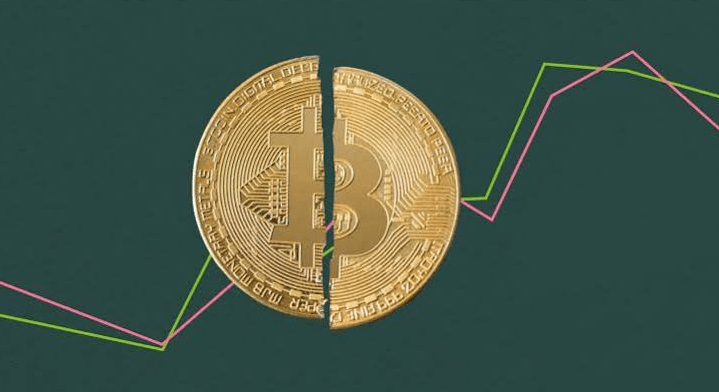
Bitcoin halving is the scheduled reduction of the block reward for miners by 50% every 210,000 blocks, roughly every four years. This fixed rule limits new supply and reinforces scarcity, independent of calendar dates. It alters miner economics, shifts incentives toward efficiency, and may elevate reliance on fees. The event influences market sentiment and network resilience, warranting careful analysis of timing, incentives, and potential price implications as the emission path tightens. The implications extend beyond the event itself, inviting further scrutiny.
Bitcoin halving is the process by which the reward for mining new blocks is reduced by half approximately every four years, or every 210,000 blocks. This mechanism recalibrates mining rewards and constrains supply growth, shaping long-term inflation dynamics. The event dampens issuance, aligning incentives, and preserving scarcity. Researchers analyze affects on network security and price signals within a decentralized, permissionless framework.
The triggering of the halving event is governed by a fixed block-based cadence rather than a calendar date: approximately every 210,000 blocks, the mining reward is cut in half.
Halving mechanics define the cadence, not sentiment, shaping supply dynamics and predictability.
The timeline remains gradual, with intervals varying in calendar approximation, emphasizing transparent, rule-based emission and long-run scarcity.
Miner economics during halving phases hinges on the altered marginal cost of newly minted coins and the consequent shifts in supply growth.
Block rewards tighten, incentivizing efficiency and potential capital reallocation.
Fee economics adapt as transaction fees supplement revenue.
Mining difficulty responds to hash-rate changes, while network security depends on sustained incentives, market reactions, and orderly supply adjustments.
See also: How Technology Is Advancing Modern Enterprise Excellence
Investors face a shift in risk-return dynamics as block rewards compress, altering the equation between supply growth and fee-based revenue.
The implications for investors and network health are: Bitcoin rewards influence long-term incentives, while market resilience depends on adaptive fee markets and participant engagement.
Investor sentiment impacts fork risk, network security, and perceived sustainability in halving-driven cycles.
Bitcoin halving, a programmed reduction of block rewards roughly every 210,000 blocks, constrains new supply and tightens emission over time. It reinforces scarcity, pressures miner economics, and can influence price sentiment through reduced inflation. An instructive statistic: since inception, block rewards dropped from 50 BTC to 6.25 BTC in three halvings, advancing supply discipline while miners adapt to higher efficiency needs. The cadence embeds predictable scarcity into market expectations, shaping long-run network resilience and investment risk profiles.